
Key takeaways
- Only about 51% of U.S. adults own life insurance in 2026 — down from 63% in 2011, according to the LIMRA and Life Happens Insurance Barometer Study.
- A record 42% of adults — roughly 102 million people — say they need life insurance or more of it, and more than 100 million acknowledge an outright coverage gap.
- The single biggest reason is a price myth: about three-quarters of adults overestimate the cost, and young adults guess 10 to 12 times too high. A healthy 30-year-old can often buy a $250,000, 20-year term policy for around $150 a year.
- The gap is uneven. Ownership ranges from about 58% among Black Americans (the highest) down to roughly 40% among Hispanic Americans — an 11-point drop since 2021.
- The DIME method (Debt + Income + Mortgage + Education) turns "how much do I need?" into a number you can actually calculate.
Every summer, LIMRA and the nonprofit Life Happens publish the Insurance Barometer Study — the industry’s most-watched read on how Americans feel about protecting the people they love. The 2026 edition landed with a familiar, stubborn headline: just about half of us own any life insurance at all, and well over 100 million adults know they don’t have enough.
That is not a story about reckless people. It’s a story about a good decision that keeps getting postponed — usually because of a cost myth, a bit of confusion, and the very human habit of assuming there’s always next year. Here on the First Coast, I sit across from families in Jacksonville, St. Augustine, and Camden County, GA who are financially responsible in every other way and still have a hole in their plan they didn’t know was there.
This article walks through what the 2026 numbers actually say, why the gap exists, who it hits hardest, what it costs a family when the worst happens, and — most importantly — a simple method to figure out how much coverage you actually need. It’s meant to be motivating, not scary. The fix is usually far easier and cheaper than people expect.
What the 2026 Insurance Barometer found
The Insurance Barometer Study surveys thousands of U.S. adults each year about their attitudes toward, and ownership of, life insurance. The 2026 results, summarized in LIMRA’s own reporting on the elusive life insurance consumer, tell a two-sided story.
On one side, demand has rarely been higher. A record 42% of adults say they need life insurance or need more of it — that’s about 102 million people doing the math in their own heads and coming up short. More than 100 million adults flat-out acknowledge a coverage gap.
On the other side, ownership hasn’t kept up. Roughly 51% of adults actually own a policy — barely half. The result is a stubborn “need gap”: a large and growing group of people who know they should act but haven’t yet.
There is a hopeful thread in the 2026 data, too. The need gap has narrowed slightly over the past two years, and the broader market is moving: LIMRA reports that 2025 new annualized premium topped $17.5 billion with policy sales up 7%, and it projects premium to grow 2%–6% in 2026. People are starting to act. But tens of millions still haven’t.
The cost myth that keeps people uninsured
If you ask people why they don’t have coverage — or enough of it — the top answer isn’t “I don’t need it.” It’s “I can’t afford it.” And that answer is almost always based on a number that’s simply wrong.
Year after year, the Barometer finds that Americans dramatically overestimate what life insurance costs. When LIMRA asked people to price a $250,000, 20-year level-term policy for a healthy 30-year-old, the typical guess landed around $400 a year — nearly three times the real figure of roughly $150. And the misperception is worst among the people best positioned to lock in cheap rates: LIMRA found that adults age 30 and younger overestimate the cost by 10 to 12 times. Across all ages, about three-quarters of adults get the price wrong on the high side.
Here’s roughly what level-term coverage runs for healthy, non-smoking applicants. Your exact rate depends on age, health, tobacco use, coverage amount, and term length — these are illustrative 2026 ranges, and figures change annually.
| Profile | Coverage | Term | Typical annual cost |
|---|---|---|---|
| Healthy non-smoker, age 30 | $250,000 | 20 years | ~$150–$200 |
| Healthy non-smoker, age 35 | $500,000 | 20 years | ~$300–$400 |
| Healthy non-smoker, age 40 | $500,000 | 20 years | ~$400–$550 |
| Healthy non-smoker, age 45 | $500,000 | 20 years | ~$650–$900 |
Put that next to what most people already spend without blinking — streaming subscriptions, a couple of takeout dinners a month — and the “I can’t afford it” objection tends to dissolve. For a young family, a quarter-million dollars of protection can cost less than a phone bill. You can see how coverage and options fit together on our life insurance page, or talk it through with me directly at no charge.
A decade of declining ownership
The 51% ownership figure looks less like a blip and more like a trend when you zoom out. Life insurance ownership has slid from 63% in 2011 to a low of 50% in 2022, stabilizing around 51% since. In other words, over roughly a decade, the share of adults with any life insurance fell by about 12 percentage points — even as the population grew and the cost of coverage stayed low.
Source: LIMRA and Life Happens Insurance Barometer Study, 2026.
Why the long slide? A few forces stack up. Fewer people get coverage automatically through an employer than a generation ago. Financial life is more complicated, and life insurance quietly falls to the bottom of the list behind rent, student loans, and childcare. And the product itself feels opaque to a lot of people — which brings us back to the cost myth. When something feels expensive and confusing, “later” becomes the default.
The irony is that the underlying economics have never made a stronger case. Premiums remain historically affordable, applying is faster than it used to be, and many carriers now offer simplified underwriting that skips the medical exam for qualifying applicants.
There’s also a generational wrinkle worth naming. Younger adults — Millennials and Gen Z — consistently tell LIMRA they value protecting their families and worry about leaving loved ones in a bind, yet they own coverage at some of the lowest rates. Part of that is life stage: student debt, first mortgages, and new babies all compete for the same dollar. But part of it is that many of them have never had anyone sit down and explain how the product works or what it costs. When they finally see the real numbers, the reaction is almost always the same — “That’s it? Why did I wait?”
The coverage gap isn’t spread evenly
Averages hide a lot. The 2026 study shows that some groups are far more exposed than others, and the differences are large enough to matter for how families on the First Coast plan.
Source: LIMRA and Life Happens Insurance Barometer Study, 2026.
Black Americans report the highest ownership at about 58%, followed by Asian Americans near 57% and White Americans around 52%. Hispanic Americans have the lowest ownership, near 40% — and, tellingly, that rate has fallen roughly 11 points since 2021, when it stood at 51%. LIMRA estimates that about 20 million Hispanic American adults say they don’t have enough coverage to protect their families or meet their goals.
The people most likely to be underinsured, the study finds, are younger adults, women, Hispanic Americans, and lower-income households — often the very people who also say, in the same survey, that they know they need coverage. That last part is important. This isn’t a story about people who don’t care. It’s a story about a gap between intention and action, and that gap is one a good conversation can close.
What being underinsured actually costs a family
Statistics are abstract until you translate them into a kitchen table. So let’s make it concrete.
Imagine a household on the First Coast: two working parents, two kids, a mortgage on a home near the beach, one income that covers most of the bills. If the primary earner dies unexpectedly, the family doesn’t just grieve — they face a cascade of financial questions with no good answers. Can we keep the house? How do we cover childcare so I can keep working? What happens to the kids’ college plans? How do we pay for the funeral, which alone can run $8,000 to $12,000?
Life insurance exists to answer exactly those questions in advance. Adequate coverage can pay off the mortgage so the surviving family stays put, replace lost income for the years the household needs it, keep education plans alive, and cover final expenses without touching retirement savings or borrowing.
When coverage is missing or too small, families fall back on far worse options: draining savings meant for retirement, selling the house at a bad time, taking on debt, or launching a crowdfunding campaign. The cost of being underinsured isn’t a number on a statement — it’s the difference between a family that can grieve and a family that has to scramble.
It’s worth stressing that this exposure isn’t limited to the primary breadwinner. A stay-at-home parent provides enormous economic value — childcare, household management, transportation, and more — that would cost real money to replace. If that parent passed away, the surviving spouse would suddenly be paying for services that were previously “free,” often while trying to hold down a job. That’s why coverage on both partners, sized to their real contributions, is usually the right frame for a two-parent household, not just a policy on whoever earns the paycheck.
How much life insurance do you actually need? The DIME method
The most common question I hear is also the most answerable: “How much do I need?” The old rule of thumb — 10 times your income — is a fine starting point, but it ignores your actual debts and goals. A cleaner approach is the DIME method, which adds up the four things your coverage should be prepared to handle:
- D — Debt: All non-mortgage debt, plus final expenses. Credit cards, car loans, personal loans, and roughly $10,000–$15,000 for a funeral.
- I — Income: Your annual income multiplied by the number of years your family would need it replaced (often the years until your youngest is independent — commonly 10 to 20).
- M — Mortgage: The remaining balance on your home, so your family can keep it free and clear.
- E — Education: Estimated future costs to get your kids through college.
Here’s how it looks for a representative Jacksonville family — one earner making $70,000, two children, a $250,000 mortgage balance:
| DIME component | What it covers | Amount |
|---|---|---|
| D — Debt + final expenses | Car loan, credit cards, ~$12,000 funeral | $30,000 |
| I — Income replacement | $70,000 × 10 years | $700,000 |
| M — Mortgage payoff | Remaining balance | $250,000 |
| E — Education | Two children, ~$100,000 each | $200,000 |
| Total DIME need | $1,180,000 | |
| Less existing coverage | Employer policy (1× salary) | −$70,000 |
| Coverage gap to fill | ~$1.1 million |
At first glance, a $1.1 million number can feel alarming. But remember the cost reality from earlier: a large term policy for a healthy adult in their 30s often costs a few hundred dollars a year, not thousands. DIME isn’t meant to scare you — it’s meant to replace guesswork with a target you can actually price out. You can adjust every input to your own life: fewer years of income replacement, a smaller education line, or a term length that matches the years your kids are at home.
The reasons people give — and the reality
Because the Barometer asks people why they haven’t bought coverage, we can line the common objections up against the facts. Most of them are misunderstandings, not real barriers.
| The reason people give | The reality |
|---|---|
| “It’s too expensive.” | About three-quarters of adults overestimate the cost; a healthy 30-year-old can often get $250,000 of 20-year term for around $150/year. |
| “I already have coverage through work.” | Group coverage is typically 1–2× salary and usually ends when you leave the job — rarely enough on its own for a family with a mortgage. |
| “I’m young and healthy, I’ll deal with it later.” | Rates rise with age and health changes. Younger, healthier applicants lock in the lowest lifetime pricing — waiting almost always costs more. |
| “It’s too complicated to figure out.” | The DIME method sizes your need in minutes, and simplified-issue policies can skip the medical exam for qualifying applicants. |
| “I don’t have anyone who depends on me.” | If anyone would inherit your debt, co-signed loans, or your final expenses — or if you plan to have a family — coverage still has a role. |
Seeing the objections written out tends to defuse them. Nearly every “reason” is really a question that has a straightforward, and usually reassuring, answer.
The one objection that deserves genuine respect is a tight budget. If money is truly stretched, the answer isn’t to skip coverage — it’s to right-size it. Even a modest term policy that covers final expenses and a year or two of income is far better than nothing, and it can be increased later as your finances improve. The goal is to make sure that if something happens this year, your family isn’t left with grief and a financial crisis at the same time.
Where living benefits and legacy planning fit
Life insurance in 2026 does more than pay a death benefit. LIMRA’s research shows about half of consumers are interested in policies that also help while you’re alive — covering critical illness costs, long-term care, or providing funds in an emergency. That flexibility is one reason the market is growing again.
Term, permanent, or both?
The most common question after “how much?” is “what kind?” Term life is pure, low-cost protection for a set number of years — the simplest and cheapest way to close a large gap while you have a mortgage and dependents. Permanent life (whole or universal) costs more but never expires as long as premiums are paid, and it builds cash value you can borrow against. Neither is universally “better.” The right answer depends on how long your need lasts. A young family closing a 20-year gap is usually best served by a big term policy; someone who wants a guaranteed legacy or a way to leave money to heirs tax-efficiently may want some permanent coverage in the mix.
For many First Coast families, the right plan is a layered one. A large, inexpensive term policy covers the peak-need years. A smaller amount of permanent coverage can handle lifelong needs and final expenses. And a critical illness policy can protect your savings if a serious diagnosis — cancer, heart attack, stroke — hits during your working years, when a big medical event can derail even a well-insured household.
Life insurance is also a cornerstone of estate planning. It can provide liquidity so heirs aren’t forced to sell assets quickly, equalize an inheritance among children, or simply make sure the transfer of what you’ve built is smooth rather than stressful. If you own a business or have a blended family, those details matter even more, and they’re worth getting right on paper.
Right-sizing your coverage on the First Coast
The 2026 Insurance Barometer paints a clear picture: this isn’t a country full of people who don’t value protecting their families. It’s a country where more than 100 million adults know they have a gap and simply haven’t closed it — mostly because they think it’s more expensive, more complicated, or less urgent than it really is. On all three counts, the data says otherwise.
The good news is that the fix is refreshingly simple. Run the DIME numbers, get a real quote instead of a guessed one, and match the coverage to the years your family needs it most. For a healthy adult, that often means meaningful protection for the price of a modest monthly subscription.
If you’re one of the tens of millions in that gap, let’s close it together. I’m Kate Spilsbury of Mere Benefits, an independent agency based in Jacksonville, FL, serving Northeast Florida and Camden County, GA. As an independent broker, I can compare options across carriers to find the right fit for your budget and your goals — no pressure, no jargon. Reach out for a free, no-pressure review and let’s turn a good intention into a plan your family can count on. You can also start by reading more about your life insurance options.
Sources
- LIMRA & Life Happens — 2026 Insurance Barometer Study
- LIMRA — Understanding the Elusive Life Insurance Consumer (2026)
- LIMRA — Forecasts Individual Life Insurance Premium to Grow in 2026
- LIMRA — Adults Age 30 and Younger Overestimate Life Insurance Cost by 10–12 Times
- LIMRA — How to Convert Intent to Action: Closing the Life Insurance Coverage Gap
- LIMRA — Hispanic Americans and Life Insurance
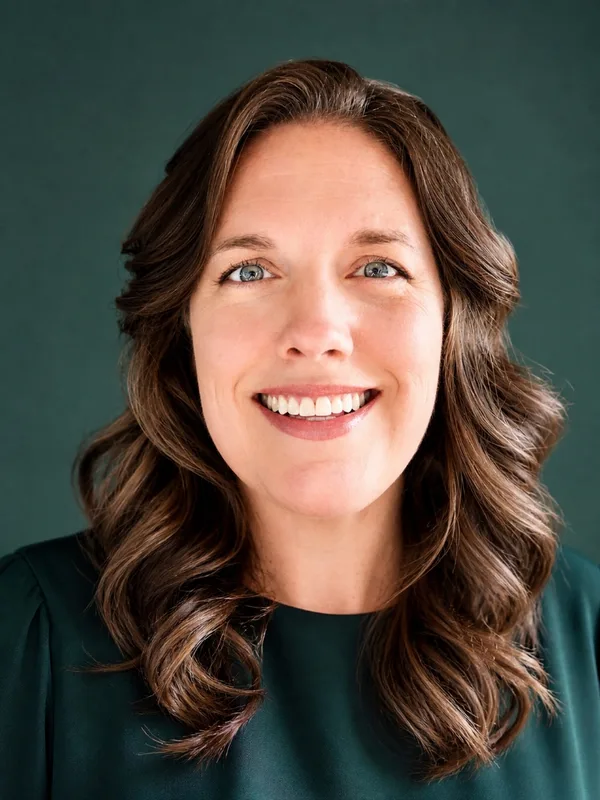
Founder & Licensed Insurance Agent at Mere Benefits — RSSA®, CMIP®. Independent, no-pressure guidance across Northeast Florida & Camden County, GA. This article is educational and not medical, tax, or legal advice.
Questions about your own situation?
Kate can turn this into a specific answer for you — free, and with no pressure.